8 Easter Bank Holiday Scams to Watch Out For in 2026

.jpg)
Fraudsters do not take bank holidays. If anything, they look forward to them.
Easter is one of the busiest fraud windows of the year. Millions of people are booking last-minute trips, transferring money to family, and moving faster than usual. Routines are broken. Attention is elsewhere. That is exactly the environment criminals plan around.
According to Featurespace, almost half of UK adults report a noticeable increase in scam attempts around peak periods such as Easter. Holidaymakers lost over £11 million to travel fraud in 2024, with an average loss of £1,844 per victim.
Here are the eight scams running this Easter, why each one works, and what to do if you come across one.
1. Fake Holiday Booking Scams
You find the perfect villa. The photos look stunning. You pay, you pack, you land – and the address does not exist.
AI can now generate convincing property images in seconds, and fraudsters are using them to list accommodation that was never real. Research by Airbnb and Get Safe Online found that 68% of UK adults believe they could spot a fake listing. When tested with actual AI-generated images, 34% believed the photos were real and 27% were not sure. More than six in ten people either fooled or uncertain.
There is a second variant worth knowing. Some fraudsters do not invent properties at all. They find genuine bookings, take over the host's account, and send fake payment requests to real customers who already have reservations. The booking looks completely legitimate because most of it is.
What to do: Reverse-search listing photos on Google Images before paying. Always pay by credit card through the official platform. Any request to transfer money directly to a bank account is a reason to stop.
2. Ghost Travel Insurance Scams
Imagine buying a fire extinguisher, only to discover it is an empty can with a label on it. That is ghost travel insurance. It looks right, it costs less than the real thing, and it does absolutely nothing when you need it.
Fake brokers advertise cut-price policies every Easter, knowing that people booking at the last minute are already anxious about cover and less likely to stop and check. The policy document arrives instantly. The insurer does not exist. Victims find out when they are abroad that something has gone wrong, and there is no one to call.
What to do: Only buy from providers listed on the FCA register. Check the insurer separately from any ABTA or ATOL protection on your booking. If it is not on the register, do not pay.
3. "Hi Mum" and "Hi Dad" WhatsApp Scams
A message arrives from a number you do not recognise. It says it is your son or daughter. Their phone is broken. They are stuck somewhere and need money urgently.
Over Easter, when families are travelling and out of their normal routines, this lands very differently than it would on a Tuesday morning in February. The distance feels real. The urgency feels plausible.
What makes it more dangerous now is that fraudsters are sending voice notes alongside the text, generated using AI voice cloning. It sounds like your child's voice, when it was made from a few seconds of audio pulled from a social media video.
What to do: Call your family member on the number you already have. Do not use any contact in the new message. Better still, agree a family code word in advance that only you would know, and use it to confirm identity before sending anything.
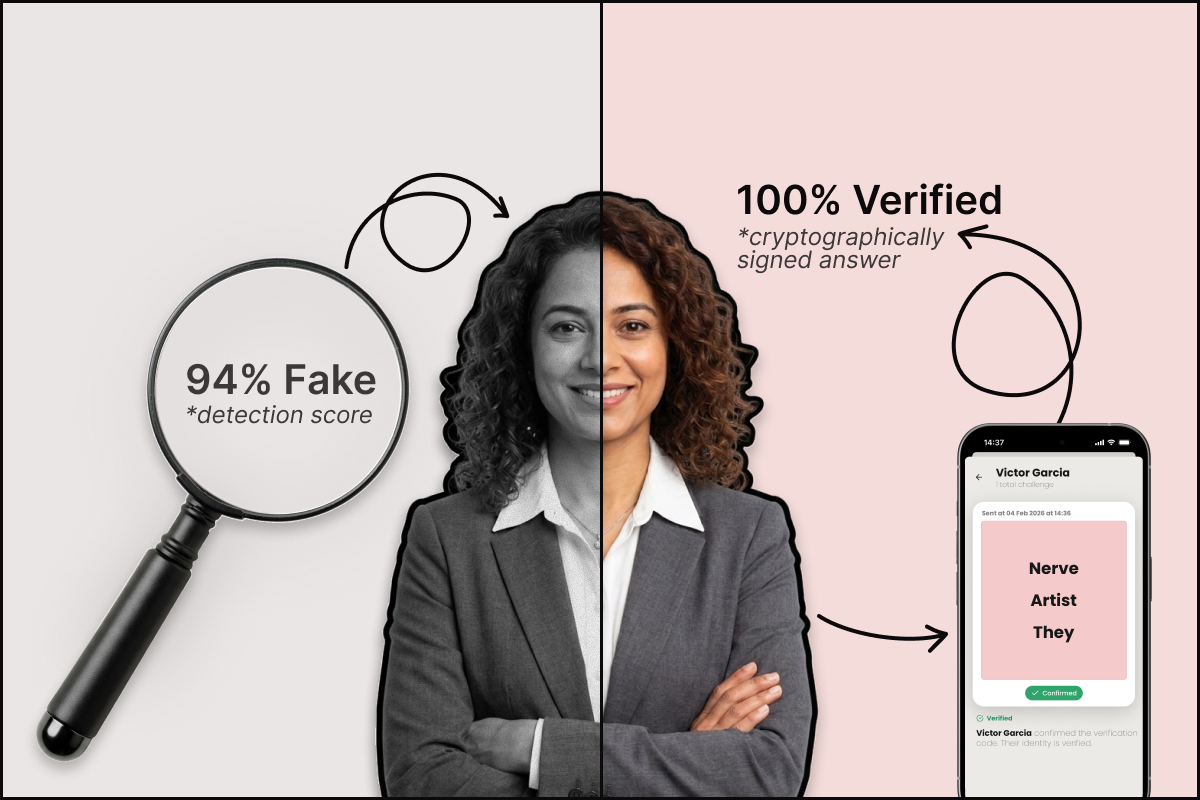
Or cut the risk entirely. Download UnDoubt and use it as a trusted channel to verify family requests. The app confirms both sides of any request before you pay or share anything. If the person cannot verify, you have your answer before it costs you anything.
4. Easter Voucher and Brand Impersonation Phishing
Every Easter, inboxes fill with emails offering free hampers, gift cards, and vouchers from well-known brands. Complete a short survey, click the link, and enter your details.
These work because they look exactly like the real promotional emails that the same brands genuinely send. The logos are right, the tone is right, and a giveaway at Easter feels normal. The only thing that gives it away is the link itself.
What to do: Do not click links in unexpected emails, regardless of which brand they appear to come from. Go directly to the company's website to check if the promotion is real. Report suspicious emails to report@phishing.gov.uk.
5. Parcel Delivery Scams
Bank holidays delay real deliveries. Fraudsters use that fact as cover.
Fake texts arrive impersonating Royal Mail, DPD, or Evri, claiming a parcel could not be delivered and asking you to click a link to rearrange it. The link takes you to a page that collects your card details before you realise anything is wrong.
This scam works at scale because almost everyone is expecting something to arrive. The text does not need to know anything about you to seem plausible. It just needs to arrive at the right moment, and over a bank holiday, that moment comes easily.
What to do: Track parcels directly on the courier's official website using your reference number. Never follow a link in a delivery text. Forward suspicious messages to 7726, which reports them to the National Cyber Security Centre.
6. Fake Event and Concert Ticket Scams
Easter draws big crowds to concerts, sports, and live events. Fraudsters sell seats that do not exist to people buying at the last minute, mostly through social media and classified ad sites.
Some sellers promise to meet you at the door with the tickets and simply vanish. Others send forgeries good enough to pass a first glance, but rejected at the gate. Either way, by the time you know, the event has started, and the money is gone.
What to do: Buy only from official venues or resellers registered with STAR, the Society of Ticket Agents and Retailers. If the only payment option is a bank transfer, walk away.
7. Clone Website Scams
A clone website is like a forgery of a shop front. Same sign, same window display, different building entirely. You walk in, hand over your money, and there is no one behind the counter.
Fraudsters build near-perfect copies of travel and booking sites. The URL might differ by a single letter. The design is pixel-for-pixel accurate. In 2024, Airbnb identified and helped remove over 3,200 of these phishing domains globally, many of which appeared in paid search results during peak booking periods.
What to do: Type website addresses directly into your browser rather than clicking from search results or ads. Bookmark the sites you use regularly. Check the URL carefully before entering any payment details.
8. QR Code Scams
QR codes are everywhere over Easter: restaurant menus, car park meters, hotel check-ins, tourist attractions. Fraudsters place fake codes over real ones on printed surfaces. You scan it, it takes you to a convincing page, and you enter your card details before noticing anything is off.
Unlike most digital scams, this one happens in a physical space you already trust. There is no suspicious email. No unknown sender. Just a small square on a surface that looks exactly as it should.
What to do: Before following a QR code, check the URL it takes you to. If it does not clearly match the business in front of you, close it. Look for stickers placed over existing surfaces or edges that look tampered with. Report anything suspicious to Action Fraud.
The Pattern Behind All Eight
None of these scams need to break into anything. They just need a moment where you trust what is in front of you and act before checking.
If something feels slightly off – the timing, the urgency, the request to use a different account – take that seriously. That feeling is usually right.
UnDoubt helps individuals and organisations confirm who they are really dealing with, in real time, before acting on any high-risk request. Follow us for updates.
Sources
[1] Featurespace. Easter Fraud Trends Research. https://www.featurespace.com/newsroom/how-to-avoid-travel-fraud
[2] Airbnb and Get Safe Online (February 2025). Easter Holiday Scam Awareness Research. https://news.airbnb.com/en-uk/airbnb-and-get-safe-online-raise-awareness-of-holiday-scams-this-easter/
[3] Action Fraud. Ticket Fraud and Holiday Fraud Reporting Data. https://www.actionfraud.police.uk
[4] STAR: Society of Ticket Agents and Retailers. https://www.star.org.uk
[5] National Cyber Security Centre. Reporting Scam Text Messages. https://www.ncsc.gov.uk/collection/phishing-scams/report-scam-text-message
[6] FCA Register. https://register.fca.org.uk