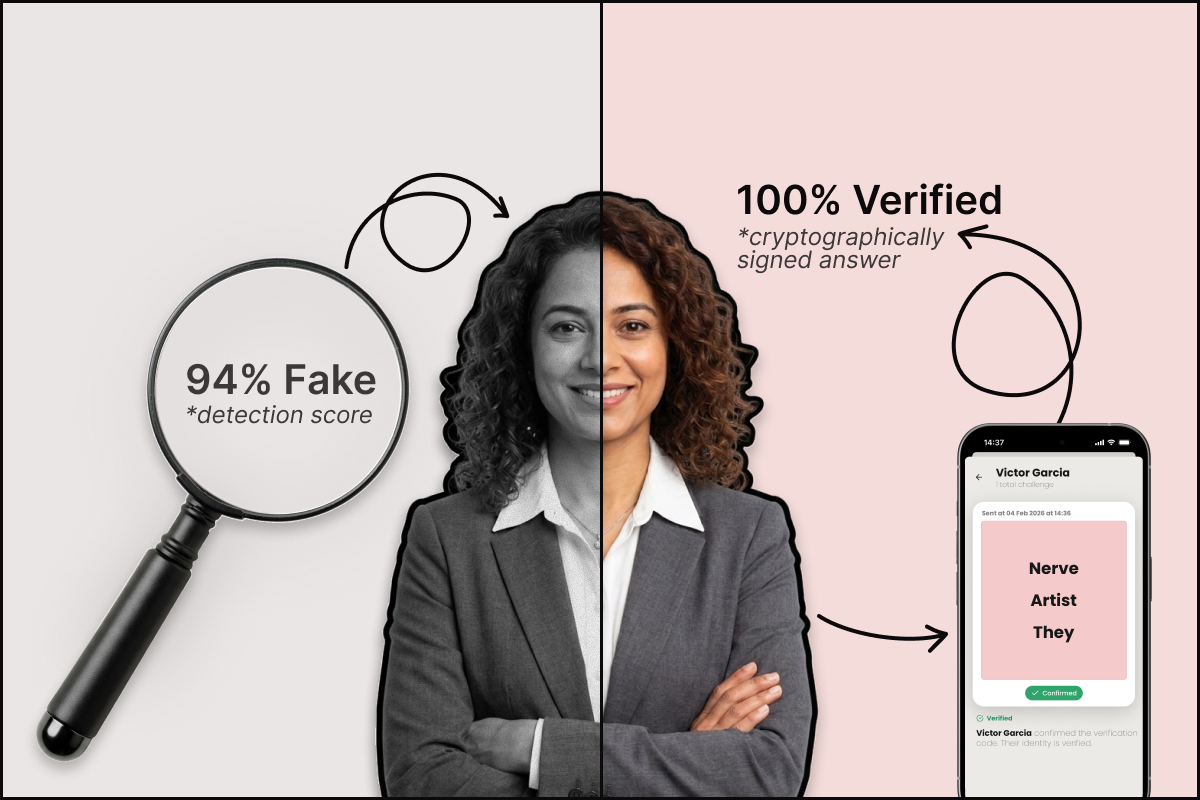
What Is Brand Impersonation and How to Protect Your Organisation in 2026

.jpg)
What is brand impersonation and why should organisations care?
Brand impersonation is a cyberattack where criminals create fraudulent emails, websites, social media accounts, or mobile apps that mimic a legitimate company's identity to steal credentials, distribute malware, commit financial fraud, or harvest sensitive data.
Unlike generic phishing, brand impersonation specifically exploits recognisable brand identities through domain spoofing, email impersonation, and fake websites. The scale is substantial: 193,407 phishing-related complaints were logged with the FBI's IC3 in 2024. With AI tools widely available, criminals create convincing attacks within minutes. BEC has surged from 1% of all cyber attacks in 2022 to 18.6%, representing a 1,760% year-over-year increase.
Why is brand impersonation dangerous for businesses and customers?
Brand impersonation damages customer trust, causes financial losses, leads to data breaches, and harms reputation. The financial impact is staggering: Business Email Compromise attacks caused worldwide losses exceeding $2.7 billion in 2022; Impersonation scams rose 148% and became the top-reported scam between April 2024 and March 2025; And 1 in 3 UK businesses reported AI-related fraud in Q1 2025.
Beyond immediate theft, companies experience trust erosion that takes years to rebuild, costly incident response, GDPR violations, trademark lawsuits, and regulatory investigations.
How does brand impersonation work in 2026? Common attack methods explained
Brand impersonation works by creating convincing replicas of legitimate brand assets. Attackers register lookalike domains, clone websites, spoof email addresses, create fake social media accounts, or develop counterfeit mobile apps, then use these to deceive targets into sharing credentials or money.
The process typically follows a pattern. First, criminals research your brand to understand its visual identity, communication style, and customer touchpoints. Then they create fraudulent assets that closely mimic the real thing. Finally, they deploy these in targeted campaigns designed to exploit trust at the precise moment someone is likely to act without questioning.
Email phishing and spoofing: the most common brand impersonation technique
In over 60% of phishing emails, attackers impersonate well-known brands to exploit trust. The Verizon 2024 DBIR found phishing accounted for 14% of breaches, with users falling for phishing in under 60 seconds. Microsoft accounts for approximately 22% of all brand phishing attempts globally in Q4 2025.
Typosquatting and domain impersonation fraud
Attackers register domains nearly identical to legitimate addresses through typosquatting (gooogle.com), combosquatting (paypal-security.com), and IDN homograph attacks using Unicode characters.
AI-powered brand impersonation: the emerging threat in 2026
GenAI-enabled scams increased by 456% between May 2024 and April 2025. By Q2 2024, 40% of BEC phishing emails were AI-generated. 1 in 4 adults have experienced an AI voice scam, with scammers needing just three seconds of audio to create an 85% voice match.
What are the most targeted brand impersonation attack tactics?
Fake login pages (credential harvesting)
Attackers clone the company’s login portals. Victims receive emails claiming there’s a security issue, an expired session, or an unusual login attempt. The link leads to a convincing look-alike site designed to steal usernames, passwords, and MFA tokens. This is consistently one of the most prevalent forms of brand impersonation, as stolen credentials can be reused across business systems.
E-commerce and delivery scams
Retail and logistics brands are frequently spoofed, especially during peak shopping seasons. Criminals impersonate companies like Amazon to send fake order confirmations, refund notices, or delivery problems. The goal is typically to:
- Steal payment details
- Capture login credentials
- Deliver malware via attachments
Because consumers expect transactional emails from these brands, the lures feel routine rather than suspicious.
Payment service and invoice fraud
Financial platforms such as PayPal are commonly impersonated in phishing emails claiming unauthorised transactions or account limitations.
Victims are pressured to “verify” their account through a spoofed portal. In business environments, attackers also send fake invoices or payment update notices that appear to come from trusted suppliers.
Social media and advertising account hijacking
Brands like Meta and LinkedIn are often used in fake policy violation or account suspension alerts. These attacks target:
- Business advertising accounts
- Company pages
- Admin credentials
Compromised social accounts can then be used to spread additional scams.
Lookalike domains and website cloning
Attackers register domains that differ by a single character or slight spelling variation from a legitimate company. These domains host cloned websites, fake support portals, or fraudulent landing pages. This tactic supports broader phishing, malware distribution, and business email compromise campaigns.
Fake customer support
Criminals impersonate well-known technology brands and advertise fraudulent “technical support” phone numbers or chat services. Victims are convinced to install remote access software or share payment information to resolve a fabricated issue.
What industries face the highest risk from brand impersonation?
Financial services, e-commerce, technology, healthcare, and legal industries face the highest risk due to valuable customer data and financial transactions. Cryptocurrency platforms, payment processors, online retailers, and SaaS providers are particularly vulnerable to domain spoofing and phishing attacks.
Financial services suffer from banking app impersonation and wire transfer fraud. Attackers target both institutions and their customers, creating fake banking portals or investment platforms.
Technology and SaaS companies see fake login pages designed to steal account credentials, license renewal scams, and fraudulent technical support operations.
Legal services experience business email compromise attacks on trust accounts, where criminals impersonate solicitors to redirect client funds during property transactions or settlements.
How do I protect my organisation from brand impersonation in 2026?
1. Implement email authentication protocols
Deploy DMARC, SPF, and DKIM protocols to prevent domain spoofing and verify legitimate senders. Start with monitoring mode to understand your email ecosystem, then move to enforcement policy (p=reject) to block fraudulent messages.
2. Register defensive domains
Secure common misspellings of your domain, alternative top-level domains like .net and .org, hyphenated versions, and country-code domains for markets where you operate.
3. Monitor domain registrations continuously
Use automated tools to detect typosquatting attempts, lookalike domains, and suspicious SSL certificates as they appear. Early detection enables faster takedown actions before significant damage occurs.
4. Train employees on impersonation tactics
56% of UK employees and executives surveyed by Dojo couldn't spot the red flags and thought spoofed emails were real. Regular security awareness training on phishing red flags, social engineering tactics, and reporting procedures is essential.
5. Enable phishing-resistant authentication
Require multi-factor authentication for all accounts. However, MFA resets, SIM swapping, and the misuse of public-facing trust signals are recurring patterns in sophisticated attacks. Use phishing-resistant authentication methods where possible, such as hardware security keys or biometric verification.
6. Monitor social media and app stores
Scan for fake accounts, unauthorised brand use, and rogue mobile apps. Report violations immediately to platforms through their abuse channels.
7. Deploy brand protection software
Use automated tools for real-time threat detection, domain takedowns, and continuous monitoring across web, social media, and mobile platforms. These systems can identify and respond to threats faster than manual processes.
8. Verify high-risk requests in real time with UnDoubt
Traditional security tools verify logins, devices and networks or detect risk after the fact. But they cannot verify whether a request is genuinely intended by the person making it. This is where UnDoubt by LastingAsset provides critical protection.
UnDoubt is a real-time verification solution that prevents impersonation by verifying requests between both parties before trust is given or actions are taken.
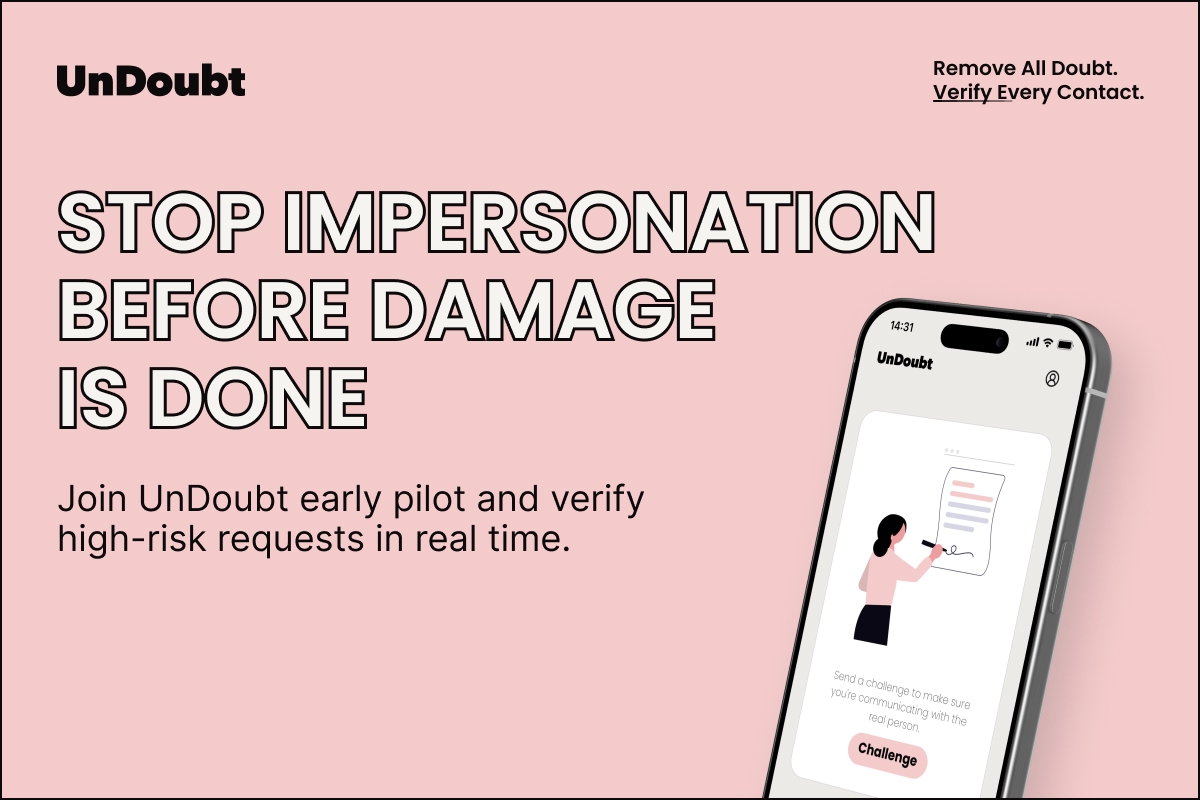
How UnDoubt protects against brand impersonation:
1. CEO fraud prevention
When an employee receives a request from someone claiming to be the CEO asking for an urgent wire transfer, UnDoubt enables mutual verification in real time. Both parties confirm the request is genuine before any action is taken.
2. Help desk impersonation protection
When IT support contacts an employee requesting credentials or system access, UnDoubt verifies the legitimacy of the request, preventing attackers from bypassing MFA through social engineering.
3. Vendor payment verification
Before processing payment detail changes or invoice payments, UnDoubt enables finance teams to verify the request directly with the vendor through a secure, mutual verification process, stopping payment diversion fraud.
4. Internal employee verification
When employees receive requests from colleagues for sensitive information or approvals, UnDoubt provides a simple way to confirm the person making the request is who they claim to be, preventing account takeover attacks.
UnDoubt works across all communication channels, making impersonation fail without creating friction or invading privacy. It addresses the fundamental problem: in an age of AI-powered impersonation, we can no longer rely on recognising voices, faces, or familiar email addresses. We need to verify the human behind the request.
Brand impersonation FAQs: your questions answered
What's the difference between brand impersonation and identity theft?
Brand impersonation mimics an organisation's identity to defraud customers or employees, whilst identity theft targets individuals' personal information. Both involve fraudulent representation but have different victims and motivations.
What should I do if my brand is impersonated?
Document evidence immediately with screenshots, URLs, and timestamps. Report to hosting providers and domain registrars. File complaints with relevant platforms. Notify law enforcement. Implement domain takedown procedures. Alert customers through official channels about the impersonation.
Can small businesses afford brand protection?
Yes. Start with free tools like DMARC, Google Alerts, manual social monitoring, and defensive domains. Train your team to recognise impersonation early. For stronger protection, join UnDoubt early pilot at a discounted rate and add a real-time verification layer to confirm who you are dealing with before money, data, or access is shared.
Do DMARC policies stop all email impersonation?
DMARC prevents exact domain spoofing but cannot stop lookalike domains or display name spoofing. Combine DMARC with employee training on identifying suspicious messages, email filtering, and real-time verification solutions like UnDoubt for high-risk requests.